EOS AI Applications is an exploratory research and development area
focused on using artificial intelligence to analyze data collected from industrial
facilities.
The objective is to investigate how SCADA systems, data loggers and event recorders can
be combined with modern artificial intelligence techniques to support operators,
maintenance personnel and engineers in understanding complex industrial processes.
Artificial Intelligence for Industrial Data
Modern industrial facilities continuously generate large amounts of operational data. SCADA
systems collect real-time measurements, status information and alarms, while data loggers
and event recorders preserve historical process information and detailed event sequences.
This information contains valuable knowledge about the behavior of equipment and processes.
However, the volume and complexity of the data can make it difficult for operators and
engineers to continuously examine all available information.
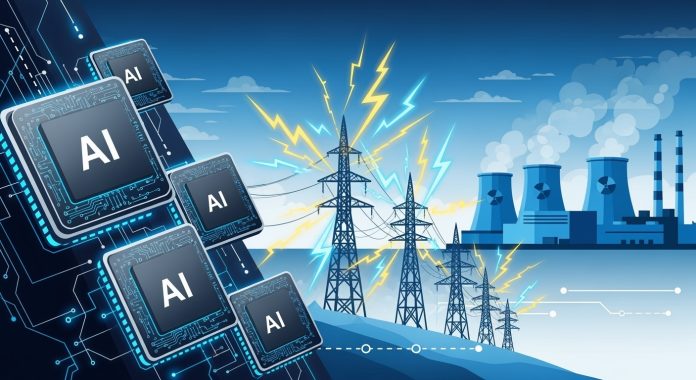
Artificial intelligence can potentially help by continuously analyzing this information,
identifying unusual behavior, correlating events and alarms, detecting developing problems
and presenting relevant information to the people responsible for operating and maintaining
the facility.
The goal is not to replace operators or engineers. Instead, AI can be used as an additional
analytical layer that helps people understand industrial data faster and make
better-informed decisions.
SCADA, Data Loggers and Event Recorders as AI Data Sources
SCADA Data
SCADA systems provide continuously updated information about process variables,
equipment states, alarms, setpoints and operating conditions.
- Real-time measurements
- Equipment status
- Alarm states
- Setpoints and process values
- Communication status
- Operator actions
Data Logger Data
Long-term historical data collected by data loggers can be used to understand normal
operating behavior, identify trends and investigate changes in equipment
performance.
- Historical process data
- Long-term trends
- Operating cycles
- Equipment performance data
- Statistical process behavior
- Historical comparisons
Event Recorder Data
Event recorders preserve sequences of alarms, status changes and system events. This
information can be particularly valuable when investigating abnormal operating
conditions.
- Alarm sequences
- Event timestamps
- Equipment state changes
- Protection events
- System events
- Event correlations
Potential AI Applications
AI Operations Assistant
An intelligent assistant that analyzes current alarms, process conditions and
recent events and provides operators with relevant information, possible causes
and recommended investigation steps.
Maintenance Assistant
AI can analyze equipment behavior, historical events and maintenance records to
help maintenance personnel identify possible equipment problems and prioritize
inspections.
Anomaly Detection
Continuous analysis of process data can identify unusual patterns and deviations
from normal operating behavior before they become obvious through conventional
alarm systems.
Intelligent Alarm Analysis
AI can analyze large numbers of simultaneous alarms, identify related alarm
groups and help distinguish potentially important events from secondary or
consequential alarms.
Event Correlation
Events occurring across different systems and equipment can be correlated
according to their timing and process relationships to help identify possible
sequences and common causes.
Predictive Maintenance
Historical measurements and equipment behavior can be analyzed to identify
patterns associated with degradation and potentially provide early warnings of
developing failures.
Early Warning Systems
AI models can continuously evaluate multiple process variables and identify
combinations of conditions that may indicate an emerging problem.
Root Cause Analysis
Historical alarms, events and process variables can be analyzed together to
investigate the sequence of conditions leading to an abnormal operating state.
Continuous Industrial Data Analysis
One of the most promising areas for industrial AI is the continuous analysis of historical
and real-time data. Instead of waiting for an operator to investigate a problem, an AI-based
system could continuously examine the behavior of the plant.
The system could compare current measurements with historical operating patterns, examine
relationships between multiple variables and identify combinations of conditions that appear
unusual.
For example, a temperature value may remain within its normal alarm limits while gradually
changing in a way that is unusual for a particular operating condition. An AI-based analysis
system could potentially recognize this deviation even though no conventional alarm has been
triggered.
Similar analysis could be applied to vibration, pressure, temperature, flow, electrical
measurements, equipment states, communication quality and other continuously recorded data.
From Alarm Management to Alarm Intelligence
Conventional SCADA systems report alarms according to predefined limits and rules. This is
essential for safe and reliable operation, but large industrial systems can generate many
alarms during disturbances.
An AI-based alarm analysis layer could examine the sequence, timing and relationships
between alarms and process variables. Instead of simply presenting hundreds of alarms, the
system could help answer questions such as:
- Which alarm is likely to be the primary event?
- Which alarms may be consequences of another event?
- What changed immediately before the alarm sequence?
- Which equipment may be involved?
- Has a similar event occurred in the past?
- What actions were taken during previous events?
One possible future application is an AI-powered operational assistant connected to SCADA,
event recorder and historical data systems.
The operator could ask questions using natural language, such as:
"What caused the increase in turbine temperature?"
"Have we experienced a similar alarm sequence before?"
"Which equipment should the maintenance team check first?"
"What changed during the last 30 minutes?"
The system could search historical data, analyze recent events and alarms, correlate
relevant measurements and present the results in a form that is easier for the operator or
engineer to understand.
Equipment failures are often preceded by changes in operating behavior. These changes may
appear as gradual deviations, increased variability, changes in relationships between
measurements or unusual combinations of process conditions.
AI-based predictive maintenance applications can investigate historical equipment data to
identify patterns associated with degradation or previous failures.
Potential applications include pumps, motors, generators, transformers, turbines, fans,
compressors, cooling systems, valves and other industrial equipment for which sufficient
historical data is available.
Research and Development Areas
AI applications for industrial systems require more than simply connecting a language model
to SCADA data. The reliability, timing, quality and context of industrial information must
also be considered.
- Anomaly detection
- Time-series analysis
- Predictive maintenance
- Alarm correlation
- Event sequence analysis
- Root cause analysis
- Natural-language data access
- AI operational assistants
- Intelligent reporting
- Equipment behavior modeling
- Early warning systems
- Industrial knowledge bases
🔬 Exploratory Research
AI applications described on this page are currently research and development topics
rather than finished EOS software products.
Initial studies are focused on understanding how industrial data collected by SCADA
systems, data loggers and event recorders can be used effectively with artificial
intelligence technologies.
The objective is to develop practical approaches that can provide useful information to
operators, maintenance personnel and engineers while keeping humans in control of
operational decisions.
Industrial facilities already contain large amounts of valuable operational information.
SCADA systems, data loggers and event recorders continuously collect information that can
potentially be transformed into higher-level knowledge using artificial intelligence.
The long-term objective of this work is to investigate practical AI applications that can
help industrial teams understand their systems, identify abnormal behavior, investigate
events and improve operational awareness.
EOS Industrial Software Hub will share research results, technical information, experimental
applications and practical examples as this work develops.